
If I don’t go for a career in academia, I still want a position in which I can read, research, think, and write. To brainstorm possibilities for a future career––potentially outside of the university––I often look to individuals who have jobs and lifestyles that appeal to me. Lauren Collins is one of those people. To glean some insight from her path to writing, I requested an interview. She graciously agreed. And now I’m bringing her answers to the SWW community.
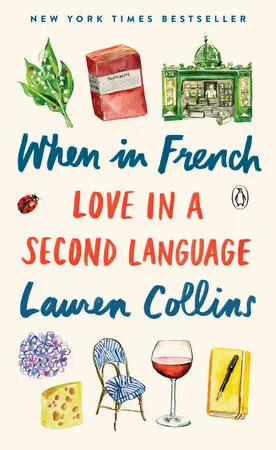
Lauren Collins began working with the New Yorker in 2003 and has been a staff writer since 2008 (she just published a fascinating piece on the pioneer-princess of Georgian cuisine, Barbare Jorjadze). She has also written a book, When in French: Love in a Second Language, that explores the nuances of affection in another language.
I loved reading her responses. Not only does Collins provide a glimpse into her own writing experience and idiosyncrasies, but she also plants seeds of inspiration for those interested in launching a writing career. Spoiler alert: There are mentions of Michelle Obama, Vogue, and chocolate eclairs.
Bonne lecture !
1) You currently live in Paris and work as a staff writer for the New Yorker. For many of us writers, this is an enviable lifestyle! Our blog audience would love to hear more about your story. What was your road to writing? How did you launch your writing career? … and end up in Paris?
If you want to take it all the way back, my road began with a near-swerve into the law. I’m the daughter of a criminal defense lawyer. In college, I spent the summer before my senior year working as an intern investigator for the Legal Aid Society of New York. In hindsight, intern-investigating–which, essentially, involved getting an address, finding it on the map, and going there and talking to whoever answered the door–looks a lot like reporting. I loved it and decided to forget the LSAT. You may not guess where this story is going next: Vogue. But I got a job there as an editorial assistant and, the next year, was hired by Susan Morrison at The New Yorker in the same role. I’ve been there since. I ended up in Paris because I married a French person.
2) How did you become a staff writer for the New Yorker? How has working for the New Yorker – and in the age of social media – changed your writing?
I became a staff writer in 2008, when The New Yorker sent me on the campaign trail to profile Michelle Obama. I don’t recall a big discussion. It was more like: clearly we can’t tell Michelle Obama we sent an assistant editor to interview her, so promotion! I had started pitching and writing short pieces, both in The New Yorker and elsewhere, a year or two after I arrived. I’ve been at The New Yorker nearly my entire career, so I’ve been formed by it more than transformed by it. But social media has changed everything and, I’m sure that that’s for the good. Twitter can be a brutal place, but it has succeeded in making journalists, particularly white ones, far more accountable to much wider audiences and in elevating work and amplifying voices that, in earlier days, wasn’t getting seen and weren’t getting heard. There is no way to write this sentence so that it doesn’t sound ridiculous but: I am so inspired by my young colleagues! I think a lot about their verve and their moral confidence and their sheer style, and hope that I’m successful in channeling some of the things I’ve learned from them into my work.
3) How do you decide on the topics of your articles?
Ideas come from everywhere: conversations with friends, conversations with acquaintances, personal experiences, throwaway lines in newspaper stories that are really about something else.
4) What topics do you love to write about? Have your preferences changed throughout your writing career?
What topics do I not love to write about is probably a more answerable question. Science, economics, and technology aren’t my areas of expertise or particular interest, although there are always exceptions (I loved writing a story about online romance in South Korea). I have become a lot less interested in writing about celebrities, even if I’m still sometimes interested in reading about them, because they are very rarely psyched to be there and the whole process becomes mutually excruciating. My litmus test is, basically, can I move the ball forward somehow? I want to feel that I have something to say about a subject, that I can treat it in a way that it hasn’t been treated. As I get older, the threshold of substantiveness seems to get higher, particularly when a story involves travel, in order to justify the time away from my family. I want to know why I’m writing what I’m writing. Some stories are a challenge to myself.
5) What does your writing process look like? (Do you write several drafts? Do you edit as you go? Do you have a preferred time of day to write?)
I like to write early in the morning, but that’s not really in the cards right now, since I take my daughter to school. I write when I can, which is usually from around nine to four. I try not to go out to lunch. I type up all my notes, highlight the parts I want to use, puzzle them into an outline, and then start my first draft. Hunter S. Thompson survived on cocaine, grapefruit, and Chartreuse; I’m on sparkling water and chocolate eclairs. I’m a start-to-finish, do-it-all-in-order kind of writer. I can’t really move on to the next words unless the ones before them are right.
6) What motivates you to write?
The prospect of helping myself and other people to understand.
7) What subjects do you feel need to be written about right now?
I think writers must bring their talents to bear in the service of the issues that trouble their consciences. For me, that subject is white supremacy in the American South. I’m writing a book about a massacre and coup d’état–the only known successful coup on American soil–that was perpetrated by white supremacists in 1898 in my hometown of Wilmington, North Carolina. It’s the only story that feels that important to me right now.
8) Who do you love to read? Which authors have inspired you to write or have shaped your career in some way?
There are so many. Three recent books I’ve admired hugely, two of which are memoir, a genre I will never get enough of: Heavy by Kiese Laymon, Tu t’appelais Maria Schneider by Vanessa Schneider, Middle England by Jonathan Coe. Reading in French is a particular thrill for me, having come to it in my thirties, and I borrow, take, and even pilfer from the language whenever I can.
9) What are you working on now?
As far as magazine writing: can’t say but it’s a good one!
The book Collins mentions in answer 7 has since been published. They Stole a City: Wilmington’s White Supremacist Coup and the Families Who Live with Its Legacy came out from Penguin on July 14, 2026. Collins remains a staff writer at The New Yorker, where she has held that title since 2008, and she is also the author of When in French: Love in a Second Language (2016).
Sources: Wikipedia, “Lauren Collins (journalist)” and “Wilmington massacre” (book citation, Penguin, ISBN 978-1-9848-7882-3).
Questions readers ask
Who is Lauren Collins?
Lauren Collins is an American journalist, born in Wilmington, North Carolina, who has been a staff writer at The New Yorker since 2008. She has been based in Europe since 2010 and lives in Paris. She wrote When in French: Love in a Second Language (2016) and They Stole a City (2026).
How did Lauren Collins start at The New Yorker?
In this interview she explains that after a college internship as an investigator for the Legal Aid Society of New York she took a job as an editorial assistant at Vogue, then was hired by Susan Morrison at The New Yorker in the same role. She became a staff writer in 2008 when the magazine sent her to profile Michelle Obama on the campaign trail.
What is Lauren Collins’s writing process?
She types up all her notes, highlights the parts she wants, puzzles them into an outline and then writes a first draft from start to finish, in order. She says she cannot move on until the words before are right, and that she usually writes from about nine to four.
What book was Lauren Collins writing in 2019?
She told Smart Women Write she was writing about the 1898 massacre and coup in her hometown of Wilmington, North Carolina. The book was published by Penguin in July 2026 as They Stole a City: Wilmington’s White Supremacist Coup and the Families Who Live with Its Legacy.
Discussed in An Hour Before the Email: How the Smart Women Actually Got Writing Done.